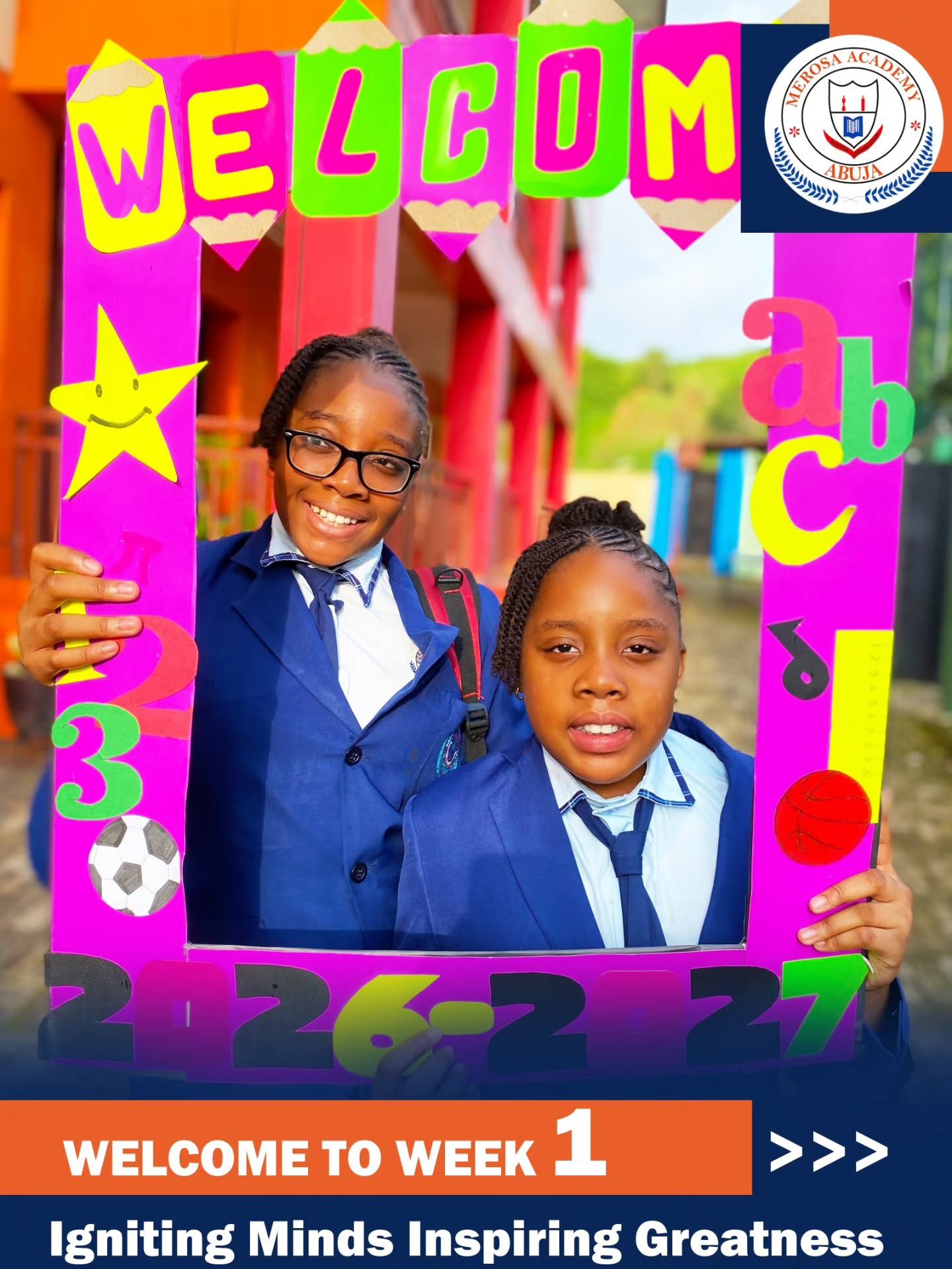
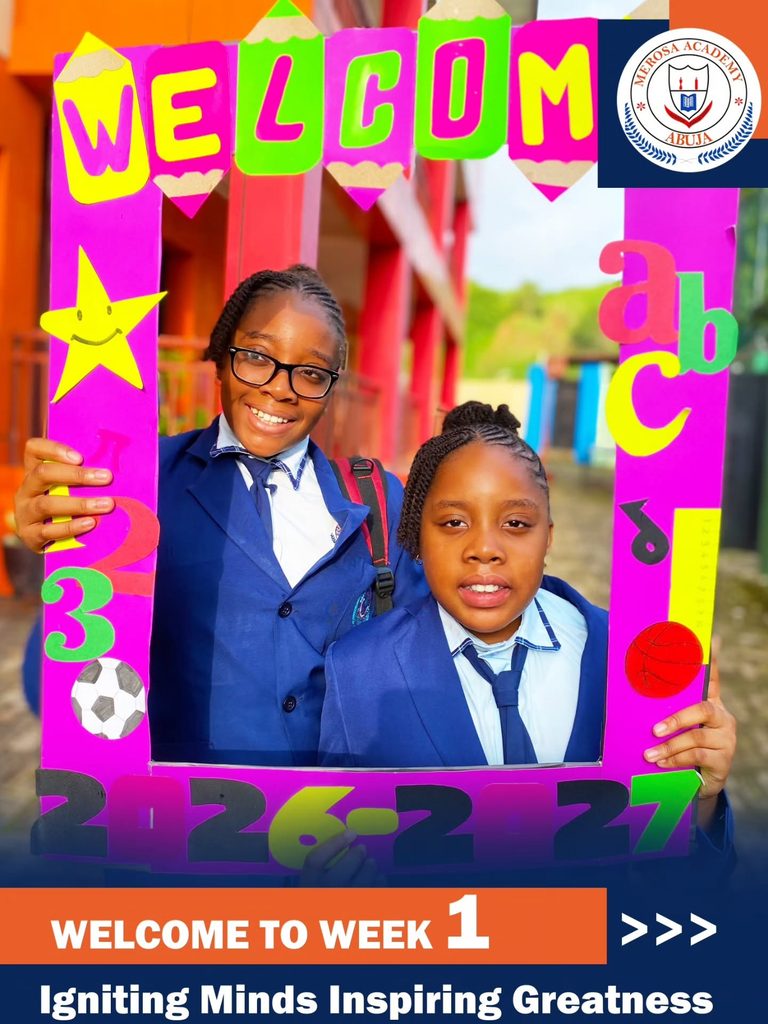
We are delighted to welcome our dear students, parents, teachers, and the entire Merosa Academy community to a brand-new academic session. As we begin the 2026/2027 academic year, we are filled with excitement, renewed energy, and great expectations for what lies ahead.
This year, we proudly embrace the theme:
IGNITING MINDS, INSPIRING GREATNESS
At Merosa Academy, we believe that every child possesses unique talents, abilities, creativity, and potential. Our responsibility is not only to provide quality education but also to create an environment where young minds are challenged to think, discover, create, lead, and excel.
Igniting Minds
To ignite minds means to awaken curiosity, encourage critical thinking, and inspire our students to become lifelong learners.
Throughout this academic session, we will continue to provide opportunities for our students to explore knowledge beyond the classroom through academics, technology, STEM, coding, robotics, creative activities, leadership development, sports, and other enriching experiences.
We want our students to ask questions, solve problems, develop new ideas, and confidently use their knowledge to make a positive difference in the world.
Inspiring Greatness
Greatness begins with the right mindset.
At Merosa Academy, we are committed to helping every student discover their strengths and develop the confidence, discipline, character, and skills required to achieve excellence.
Our teachers and staff will continue to guide, encourage, and support our students as they pursue academic excellence and personal growth.
We believe that greatness is not simply about being the best; it is about becoming the best version of yourself.
A New Session, New Opportunities
The 2026/2027 academic session presents new opportunities for learning, growth, friendship, creativity, leadership, and achievement.
We encourage our students to return to school with:
A positive attitude towards learning
A commitment to academic excellence
Respect for teachers, staff, and fellow students
Discipline and good character
Courage to try new things
Creativity and innovation
A determination to achieve their goals
To our parents, thank you for your continued trust, partnership, and support. Your involvement remains an important part of your child’s success.
To our teachers and staff, thank you for your dedication and commitment to shaping the future of our students. Your passion and professionalism continue to make a lasting impact.
And to our students, this is your year to learn, grow, dream, create, and achieve. Believe in yourself, work hard, ask questions, embrace challenges, and never be afraid to discover what you are capable of achieving.
Together, We Will Make It Great!
As we embark on this exciting journey, Merosa Academy remains committed to providing a safe, stimulating, innovative, and supportive learning environment where every child can thrive.
Let us work together as a community to make the 2026/2027 academic session a remarkable one.
Welcome back, Merosa Academy!
New session. New dreams. New possibilities.
IGNITING MINDS, INSPIRING GREATNESS!
Merosa Academy, Abuja The School for the Future Leaders.
As Christians all over the world celebrate Easter, it is important to understand the significance of this season. Easter to the Christian faith is the most important because it validates Jesus as the son of God, and also proves His victory over sin and death. Furthermore, it signifies the new covenant between God and humanity. After the fall of the first Adam there was a rift in the relationship between God and His creature(man), it took the shedding of blood of the only begotten son of God (Jesus) to restore back the relationship between God and man. There are three major lessons from the death and resurrection of Jesus Christ:
It is a proof of God’s love for man.
It is a demonstration of the redemptive power of Jesus as Christ.
It is a proof of Jesus’ power over sin and death. As we celebrate this Holy Week, may the purpose of redemption be realistic in our lives.
Every year, World Mathematics Day provides a global opportunity to celebrate the importance of mathematics in education and everyday life. The day is dedicated to encouraging students to appreciate numbers, logic, and problem-solving while promoting mathematical literacy across schools worldwide.
At Merosa Academy, World Mathematics Day is more than just a date on the calendar—it is a celebration of curiosity, creativity, and critical thinking. Mathematics plays a central role in shaping how learners understand the world around them. From managing finances and measuring distances to building technology and solving real-life problems, mathematics remains one of the most powerful tools for intellectual development.
By celebrating World Mathematics Day, schools help students recognize that mathematics is not just about formulas and calculations, but about thinking logically, solving problems, and discovering patterns that shape the modern world.
Boosting Mathematical Literacy Among Learners
Mathematical literacy refers to the ability to understand, interpret, and apply mathematical concepts in everyday situations. Celebrations like World Mathematics Day create an engaging environment where students can build confidence in their mathematical abilities.
Through interactive learning activities, learners begin to see mathematics as an enjoyable and meaningful subject rather than a difficult one. Events organized during the celebration help to:
Strengthen problem-solving skills
Improve logical reasoning
Build confidence in working with numbers
Encourage teamwork and collaboration
Promote curiosity and critical thinking
When students participate in exciting mathematics-based activities, they become more willing to explore challenging concepts and develop a deeper understanding of the subject.
EYFS Maths Quiz Competition
How Maths Quizzes Help Students Improve
One of the most exciting ways schools celebrate World Mathematics Day is through mathematics quizzes. These competitions create a fun and stimulating environment where students can test their knowledge while learning from their peers.
Math quizzes help learners in several important ways:
1. Reinforcing Classroom Learning Quiz questions often cover topics already taught in class, allowing students to revisit and strengthen their understanding.
2. Improving Speed and Accuracy Timed quiz rounds encourage students to think quickly and solve problems accurately under pressure.
Year School Maths Quiz Competition
3. Building Confidence When learners answer questions correctly or contribute to their team’s success, it boosts their confidence and motivation to learn more.
4. Encouraging Healthy Competition Friendly competition inspires students to prepare better, practice regularly, and strive for excellence in mathematics.
Creating Future Problem Solvers
Celebrating World Mathematics Day at Merosa Academy helps nurture a generation of learners who are confident in their mathematical abilities. By combining learning with excitement through quizzes, games, and collaborative activities, students develop the skills needed to tackle real-world challenges.
Ultimately, World Mathematics Day reminds us that mathematics is not just a subject in school—it is a universal language that empowers learners to think critically, innovate, and succeed in the future.